

Meet Your Consultant: Erwin Preciado
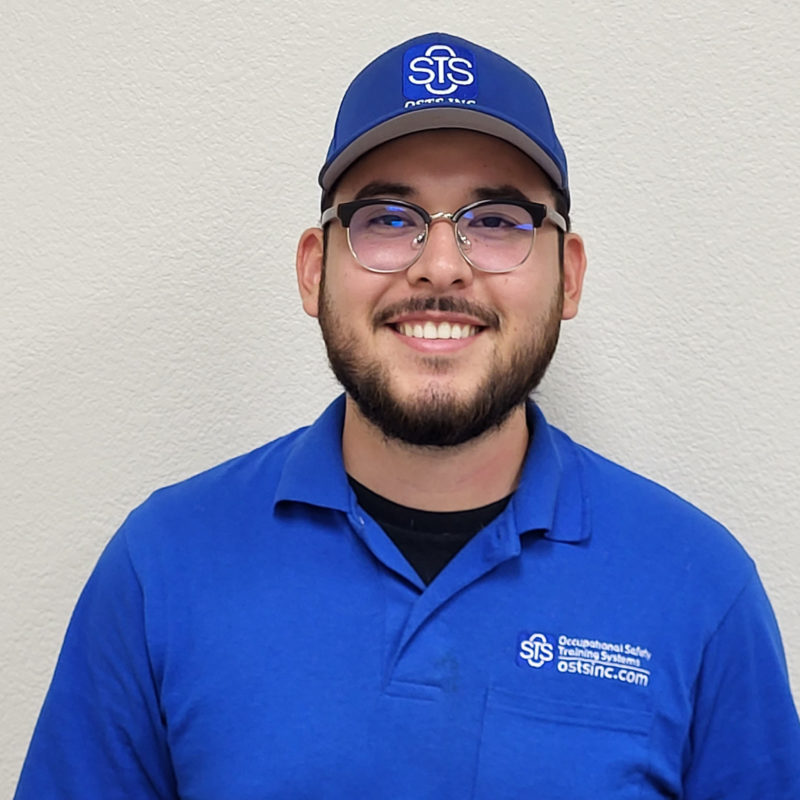
Prior to becoming a safety instructor, Erwin Preciado was pursuing a career in psychology. He attended Rio Hondo College to earn his associate degree, with the goal of transferring to Cal State LA—a goal he eventually achieved while working at OSTS. His background in psychology has proven to be incredibly valuable, particularly in understanding the human aspect of safety and training.
“How people learn, think, and respond—it’s helped me connect more effectively with trainees,” he explained.
Ultimately, Erwin realized he preferred safety training because it felt more interactive and personal. He enjoys directly engaging with groups of employees and helping them learn in a practical, hands-on way. His favorite part of teaching is witnessing those moments when something finally clicks for a student.
He explained a lot of the times it’s the material they are reviewing, and trainings that the employees have been through many times before.
“If I can help them learn at least one additional thing or really make something make sense that maybe didn’t catch on too much before, then, I feel like that’s what I’m looking for, and that’s the reason why I do this,” he said.
One of the biggest challenges he faces while training is getting people to become interested in the subject matter and finding motivation to want to learn the material. This can be especially difficult when classes are scheduled after lunch or at the end of a work shift.
“At that point, people are tired, and it’s hard to get them to participate or stay interested,” he noted.
To overcome this, he tries to keep the material relatable by drawing from real-world experiences and examples across different workplaces. He also incorporates hands-on activities whenever possible, so participants stay actively involved.
When speaking with employers who question the importance or cost of safety, Erwin emphasizes the true cost of workplace incidents. While fines may seem relatively small, they are only a fraction of the overall impact.
“An incident can lead to lost productivity, retraining costs, medical expenses, and long-term effects on both employees and operations,” he said. “Investing in safety upfront is far more cost-effective than dealing with the aftermath of an accident.”
Since entering the safety training field nine years ago, Erwin has become far more aware of safety issues in everyday life. One of the most significant personal experiences that shaped his perspective was an accident involving his mother about five years ago. She was working at a company that manufactured RV ladders when a power outage caused a machine to shut down while in production. When the power returned, the machine unexpectedly restarted and malfunctioned, launching a piece of material that struck her in the abdomen area and caused her to lose consciousness.
“It was an older machine. It shouldn’t have turned back on. It should have stayed off until somebody manually powered it back on. But it turned back on, and it continued with its procedure,” he said.
When she woke up, her coworkers gathered around her, debating whether to call 911—but ultimately, they didn’t.
She later told him about the incident. “[As a safety instructor] I was furious,” he said. “They should have called 911. She passed out.”
After the incident occurred, he went to her workplace to ask questions, and although the company tried to explain, there was no real justification. It was the only time he had to summit a complaint to Cal OSHA. “If that had happened to my mom, it’s probably happened before, where someone else got hurt a different way.”
That incident became a turning point in his career. He used the resources that were available to him and exercised these rights to have a healthful and safe workplace.
And from then on, he felt like he was part of a group of people who weren’t done right when there was an injury or have seen an incident happen. “It just gave me more motivation to keep doing what I’m doing [at OSTS].”
For Erwin, education is key. When employees understand safety, they are better equipped to recognize hazards, speak up, and advocate for themselves. Without that knowledge, it becomes difficult to determine what’s right, what’s wrong, and what actions should be taken—by both employees and employers.
One concept he frequently emphasizes is that safety regulations represent only the minimum standard.
“Compliance alone isn’t enough—you have to think about what’s effective,” he said.
He offered a simple example: regulations may state that one portable toilet is sufficient for 20 workers on a construction site. Technically, that meets the requirement—but it may not be practical.
“I always tell people: don’t just aim to meet the minimum. Aim to do what works and keeps people safe. That’s the goal we should all be striving for.”


