


Workplace Fatigue: Understanding the Risks and How to Prevent It
Workplace fatigue is a growing safety concern across many industries. It reduces productivity, increases the risk of accidents, and can lead to serious injuries on the job. Many employees experience both physical and mental exhaustion during the workday, especially in high-demand or long-hour roles.
In California, fatigue remains a significant workplace safety concern, contributing to thousands of preventable injuries each year, above the national average. This highlights the importance of addressing fatigue as part of a strong workplace safety program.
In this blog, we’ll break down the main causes of occupational fatigue, its risks, and effective prevention strategies employers can use to create a safer and more productive work environment.
What is Workplace Fatigue?
Workplace fatigue is physical, mental, or emotional exhaustion that reduces performance and is commonly caused by poor sleep or long hours. Stress, repetitive tasks, demanding workloads, and inadequate recovery time can also contribute to occupational fatigue. Fatigued employees also have difficulty focusing and making decisions.
Common Causes of Worker Fatigue
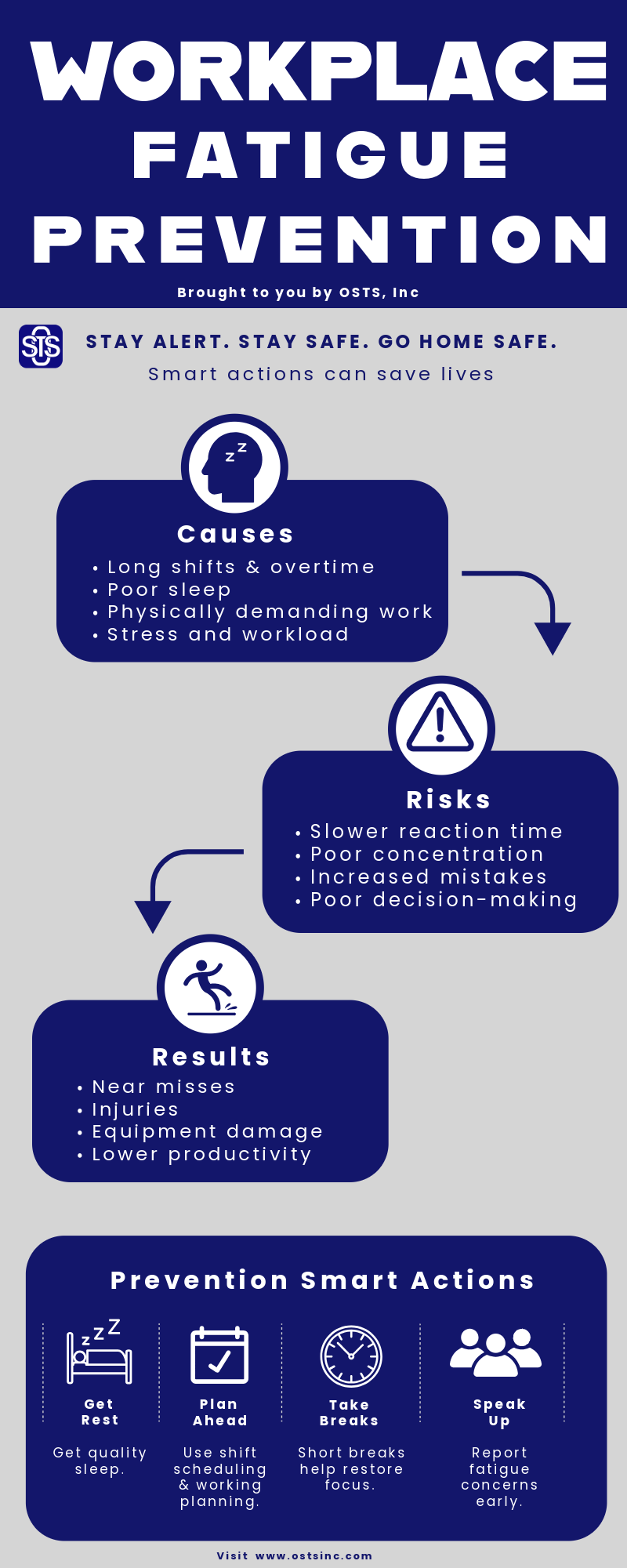
Worker fatigue can result from several workplace and lifestyle factors. Insufficient sleep, extended shifts, and frequent overtime are among the most common causes, often leading to increased exhaustion and decreased alertness. High-pressure work environments can further intensify fatigue, especially when stress is prolonged.
Lifestyle habits also play a significant role. Poor nutrition and dehydration can reduce energy levels throughout the day, while prolonged sitting and limited physical activity may contribute to feelings of tiredness. For remote and office-based employees, excessive screen time can cause digital fatigue, affecting focus and productivity. Additionally, an unhealthy work-life balance can prevent employees from getting the rest and recovery needed to maintain optimal performance.
The Impact of Workplace Fatigue on Safety and Performance
Fatigue reduces concentration and slows reaction times, leading to more mistakes and lower productivity. In some industries, such as healthcare and construction, fatigue can contribute to serious workplace accidents and injuries.
Fatigue doesn’t just affect individual employees, it can also have a significant financial impact on organizations. The National Safety Council estimates that fatigue costs employers billions of dollars annually through lost productivity, absenteeism, and workplace incidents. These costs can quickly add up through reduced efficiency, increased errors, higher turnover, and workplace injuries.
Tired employees may also become less motivated and more irritable, which can negatively affect teamwork and communication. Over time, chronic fatigue can contribute to burnout, increased absenteeism, and higher employee turnover.
Signs of Workplace Fatigue
Common signs of fatigue include:
- Difficulty concentrating
- Slower reaction times
- Frequent mistakes
- Increased irritability
- Low energy levels
- Reduced productivity
How Employers Can Reduce Employee Fatigue
Here are practical steps to prevent workplace fatigue:
- Encourage regular breaks during the workday to help employees recharge
- Limit long shifts and excessive overtime to prevent physical and mental exhaustion
- Promote healthy sleep habits through education and workplace wellness programs
- Improve workplace ergonomics to reduce physical strain and discomfort
- Foster an open culture where employees can report fatigue without stigma
Task rotation and scheduled breaks can be especially effective in physically demanding industries. According to OSTS Safety Instructor and Consultant Manager Ismael Garcia, who has been with OSTS for 28 years, this can be done by rotating people frequently, though it’s only one of several possible approaches.
“It depends on what industry we’re talking about. It affects construction employees most of the time, but rotating employees and taking frequent breaks as needed are ways to minimize that.”
By rotating employees more frequently—especially in construction—and ensuring regular breaks, employers can help reduce the issue. This approach can reduce physical strain, maintain alertness, and lower the risk of fatigue-related incidents.
Creating a Safer Workplace Through Fatigue Prevention
Occupational fatigue can negatively affect safety, productivity, and employee well-being. By recognizing the causes and implementing fatigue prevention strategies, employers can reduce workplace risks and support a healthier workplace.
“If you feel there’s something that isn’t safe for you or could cause an injury to you or others, say something. Don’t stay quiet,” Garcia says.
Preventing workplace fatigue helps create an environment where employees can recognize risks, speak up when they’re fatigued, and return home safely at the end of each day.
At OSTS, we know workplace safety is about more than just compliance. When workers are tired, the risk of injuries, mistakes, and lower productivity goes up. That’s why we help organizations build safer workplaces through training, hazard assessments, and stronger safety culture. Addressing employee fatigue is another simple but important step toward a healthier, safer, and more productive team. Contact us today to see how we can help you!
Need Help Reducing Workplace Fatigue?
OSTS can help your organization identify fatigue-related risks and build a safer, healthier workplace through training, hazard assessments, and practical safety solutions.


